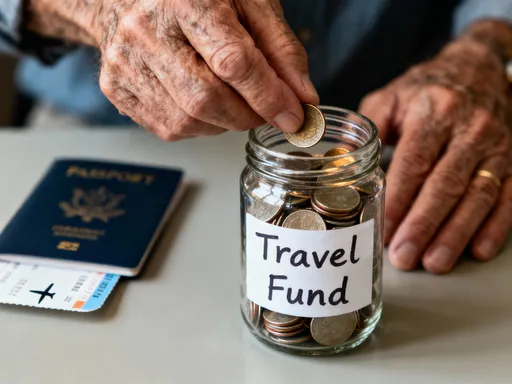
How I Protect My Travel Fund Without Killing the Dream
Saving for travel doesn’t mean risking your future. I’ve learned the hard way that chasing deals or high returns can backfire fast. Now, I focus on protecting my travel fund while still growing it safely. It’s not about getting rich—it’s about avoiding costly mistakes. In this article, I’ll walk you through how to secure your money, stay flexible, and keep your dream trips alive—without gambling on risky moves. The journey to your next destination should bring excitement, not anxiety. By aligning practical financial habits with thoughtful planning, you can build a travel fund that supports your dreams without compromising your stability.
The Hidden Risk Behind Dream Trips
Many people treat travel savings like everyday spending money, not realizing how vulnerable it can be. A dream vacation often starts with inspiration—a photo, a story, or a spontaneous conversation—but turning that vision into reality requires more than just enthusiasm. It demands financial discipline. Without it, even the most carefully planned trip can collapse under unexpected costs or poor money choices. The truth is, a travel fund is not a piggy bank to be broken at the first sign of trouble. It is a financial goal that deserves protection, structure, and intention.
One of the most common mistakes travelers make is assuming their savings are safe simply because they’re not being spent. Some keep large sums in low-interest checking accounts, where inflation slowly erodes their value. Others are tempted by promises of high returns from speculative investments, not realizing that short-term market volatility can wipe out months of careful saving. Still, others rely on credit cards to cover last-minute expenses, only to face steep interest charges that delay future travel plans. These choices may seem harmless at first, but their consequences compound quickly.
Consider the case of a woman planning a family trip to Europe. She saved diligently for 18 months, putting aside $7,000 in a regular savings account earning less than 0.5% annual interest. When an unexpected car repair arose, she dipped into her travel fund, assuming she could make up the difference later. But life had other plans—a medical bill followed, then a home appliance failure. Within months, nearly half her savings were gone. By the time she was ready to book flights, prices had risen, and she had to postpone the trip indefinitely. Her dream didn’t fail because she lacked desire; it failed because her fund lacked resilience.
This scenario is more common than many realize. Travel goals are often treated as discretionary, which makes them the first to be sacrificed when emergencies arise. The key shift in mindset is understanding that protecting your travel fund is not about restriction—it’s about strategy. Just as you wouldn’t leave your passport or tickets unsecured, you shouldn’t leave your money exposed to unnecessary risk. A well-structured travel fund respects both your aspirations and your financial reality. It allows you to move forward with confidence, knowing that your savings are working for you, not against you.
Why Safety Comes Before Speed
When it comes to saving for a trip, growth matters—but security matters more. Many people assume that to get ahead, they need to take bigger risks. They hear stories of friends doubling their money in stocks or cryptocurrency and wonder why they’re still saving slowly, dollar by dollar. But what they don’t see are the losses, the sleepless nights, or the canceled vacations when markets dip at the wrong time. For short- to mid-term goals like travel, preserving capital should be the top priority. The goal isn’t to maximize returns; it’s to ensure the money is there when you need it.
Markets are unpredictable, especially over short periods. A stock portfolio might gain 15% in one year and lose 10% the next. While long-term investors can ride out these fluctuations, someone saving for a trip in two years cannot afford to lose a significant portion of their fund just months before departure. Imagine planning a once-in-a-lifetime safari, only to see your investment value drop 20% in the final six months. Even if the market recovers later, you may have no choice but to delay or downsize your trip. That kind of stress defeats the purpose of travel, which is to refresh and reconnect.
Low-volatility options offer a smarter alternative. Instruments like high-yield savings accounts, short-term certificates of deposit (CDs), and Treasury securities may not generate headline-grabbing returns, but they provide stability and predictability. For example, a short-term CD with a fixed interest rate ensures that your principal is protected and your earnings are known in advance. While inflation-adjusted returns might be modest, the peace of mind is invaluable. You’re not chasing performance; you’re building reliability.
Time horizon plays a crucial role in this decision. Financial advisors often recommend aligning investment risk with how soon you’ll need the money. A general rule is: the closer your trip, the more conservative your strategy should be. If your journey is less than three years away, aggressive assets like stocks or crypto should play little to no role in your travel fund. Instead, focus on capital preservation. As your departure date approaches, shift toward fully liquid and secure accounts so you can access your money without penalties or market exposure. Safety isn’t a sign of fear—it’s a sign of respect for your goals.
Building Your Financial Safety Net First
Before you set aside a single dollar for travel, you need a financial foundation strong enough to support it. Without an emergency fund, your travel savings become a target every time life throws a curveball. Car trouble, medical expenses, home repairs, or a temporary job loss can all lead to one outcome: raiding your trip money. And once that happens, rebuilding momentum is hard. The excitement fades, motivation drops, and the dream starts to feel out of reach. That’s why protecting your travel fund begins with creating a separate safety net—one that stands between you and unexpected costs.
An emergency fund acts as a financial buffer, typically covering three to six months of essential living expenses. For a household spending $4,000 per month, that means setting aside $12,000 to $24,000 in a secure, accessible account. This may seem like a large amount, especially if you’re also trying to save for travel, but it’s essential for long-term stability. Think of it as insurance: you hope you never need it, but you’ll be grateful it’s there when you do. Without it, every financial surprise becomes a crisis that threatens your goals.
Some may argue they can’t afford to save for both emergencies and travel. But the reality is, you can’t afford not to. Trying to save for a trip while skipping emergency preparation is like building a house on sand. One strong wind, and everything shifts. A more sustainable approach is to save for both, even if slowly. For example, you might allocate 70% of your monthly savings to the emergency fund and 30% to travel. Once the emergency cushion is complete, you can redirect more toward your trip. This phased strategy builds resilience without sacrificing dreams.
Where you keep your emergency fund matters too. It should be in a separate account from your daily checking, ideally one that earns interest but allows quick access. High-yield savings accounts are a popular choice because they offer better returns than traditional banks while remaining liquid. The key is avoiding anything that locks up your money or exposes it to market risk. Your emergency fund isn’t meant to grow wealth—it’s meant to prevent financial setbacks. With this safety net in place, you can save for travel with confidence, knowing that life’s surprises won’t derail your plans.
Choosing the Right Shelter for Your Money
Not all savings accounts are created equal, and where you park your travel fund can make a meaningful difference in both safety and growth. The goal is to find a balance: your money should be protected from loss, easily accessible when needed, and earning a modest return to keep pace with inflation. High-yield savings accounts, short-term CDs, and government-backed instruments like Series I Savings Bonds are among the most reliable options for achieving this balance. Each has its strengths, and understanding them helps you make informed decisions without chasing hype or complexity.
High-yield savings accounts are often the best starting point. Offered by online banks and credit unions, they typically pay significantly higher interest rates than traditional brick-and-mortar banks—sometimes more than ten times higher. These accounts are FDIC-insured up to $250,000, meaning your money is protected even if the bank fails. They also allow for easy transfers, so you can move funds when booking flights or hotels. While rates fluctuate with the economy, they tend to rise during periods of higher interest rates, giving savers a chance to earn more without taking on risk.
Short-term CDs are another solid choice, especially if your travel date is fixed. A CD, or certificate of deposit, locks in your money for a set period—anywhere from three months to five years—in exchange for a guaranteed interest rate. The longer the term, the higher the rate, but for travel savings, shorter terms (six to 18 months) are usually best. The trade-off is limited access: withdrawing early usually incurs a penalty. However, if you know your trip is coming and want to protect your principal while earning steady returns, a CD can be an excellent fit.
For those concerned about inflation, Series I Savings Bonds offer a unique advantage. Issued by the U.S. Treasury, these bonds earn interest based on a fixed rate plus an inflation-adjusted rate that changes every six months. This means your return rises when inflation does, helping preserve your purchasing power. They’re also tax-deferred and exempt from state and local taxes, making them efficient for long-term savings. The catch? You must hold them for at least one year, and withdrawing within five years incurs a penalty. Still, for trips planned two to five years out, they’re a smart way to grow savings safely.
No option is perfect, but each provides a level of security that speculative investments cannot match. The key is matching the tool to your timeline and goals. By choosing the right shelter for your money, you ensure that your travel fund remains intact, accessible, and steadily growing—exactly where it needs to be when the time comes to book your adventure.
Timing Is Everything—How to Match Goals with Strategy
When it comes to travel savings, timing shapes everything. A trip planned for next summer requires a very different approach than one five years away. Misaligning your strategy with your timeline is one of the most common—and costly—mistakes. The closer your departure date, the less room you have for error, which means your savings method should prioritize safety and access over growth. The farther out your trip, the more flexibility you have to consider modest growth options, as long as they remain low-risk.
Consider two scenarios. In the first, a couple is preparing to attend a destination wedding in Italy in ten months. Their budget is $6,000, and they need the money available by spring. In this case, the best approach is to use a high-yield savings account or a short-term CD that matures just before booking. These options protect the principal, offer modest interest, and ensure the funds are liquid when needed. Taking on market risk would be unnecessary and potentially disastrous—if their investment drops 10% in the final months, they may have to skip the trip or dip into other savings.
In the second scenario, a woman is dreaming of a round-the-world journey in 2027. With six years to go, she has more time to consider slightly longer-term instruments. She might allocate part of her savings to a laddered CD strategy—spreading money across multiple CDs with staggered maturity dates. This allows her to benefit from higher rates while maintaining some liquidity. She could also invest in Series I Savings Bonds, which grow with inflation and won’t penalize her if held beyond five years. Because her timeline is longer, she can afford to lock up some funds while still staying on track.
The core principle is alignment: your savings strategy should mirror your calendar. As your trip approaches, shift toward fully liquid and secure accounts. Avoid last-minute decisions based on market movements or promotional rates that come with penalties. For example, some banks offer bonus interest for new accounts, but only if you keep the money for a full year. If your trip is in eight months, that deal could backfire. Always read the terms, understand the withdrawal rules, and plan ahead. By structuring your savings around your actual timeline—not market noise—you gain control and reduce stress.
The Temptation Trap—Avoiding “Smart” Shortcuts
Even the most disciplined savers can fall prey to temptation. When you hear about someone making thousands in crypto overnight or doubling their money in a hot stock, it’s easy to wonder if you’re missing out. The fear of being left behind—commonly known as FOMO—can quietly erode good financial habits. But your travel fund is not a testing ground for investment theories. It’s a promise you’ve made to yourself, and breaking that promise for the sake of a gamble isn’t bravery—it’s risk disguised as ambition.
Behavioral finance shows that people often make poor money decisions when emotions run high. Excitement, impatience, and social pressure can all lead to choices that feel smart in the moment but backfire over time. A woman might see a viral post about a “can’t-miss” altcoin and decide to move $2,000 from her Bali trip fund into it, thinking she’ll cash out before any drop. But markets don’t follow personal timelines. What if the price crashes before she can exit? What if new regulations cause a sudden sell-off? The trip gets delayed, the stress builds, and the lesson comes at a high cost.
The truth is, there’s no shortcut to reliable savings. Compound interest works best when it’s steady, not speculative. A 5% annual return from a diversified, low-risk portfolio over five years is more valuable than a 50% gain followed by a 40% loss. Consistency beats volatility, especially for defined goals. Staying patient isn’t boring—it’s strategic. It means you’re honoring your timeline, respecting your effort, and protecting your peace of mind.
To resist temptation, create clear boundaries. Decide in advance what portion of your portfolio, if any, is allocated to higher-risk investments—and keep it separate from your travel fund. Automate your savings so that money flows directly into your designated account without giving impulse decisions a chance to interfere. Remind yourself why you’re saving: not to get rich, but to experience new cultures, create memories, and return home refreshed. Those rewards are real, lasting, and worth protecting.
Putting It All Together—A Stress-Free Path to Your Trip
Building a travel fund doesn’t have to be complicated or stressful. When you break it down into clear, manageable steps, the path becomes much clearer. Start by establishing a solid emergency fund—this is your foundation. Once that’s in place, begin setting aside money for travel in a secure, interest-bearing account that matches your timeline. If your trip is less than two years away, prioritize liquidity and safety. If it’s further out, consider modest growth options like laddered CDs or inflation-protected bonds. Always keep your principal protected, and avoid mixing your travel savings with speculative investments.
Automate your contributions whenever possible. Even small, consistent deposits add up over time and reduce the mental load of saving. Review your progress quarterly, adjusting for changes in plans or income. Stay flexible—if your trip gets delayed, don’t panic. Use the extra time to grow your fund further or improve your experience with better bookings. And most importantly, protect your mindset. Saving for travel is an act of self-care, not deprivation. Every dollar you set aside is a vote for future joy, connection, and discovery.
The best part of travel isn’t just the destination—it’s arriving there with peace of mind. Knowing you didn’t compromise your financial stability, that you avoided costly mistakes, and that you honored your commitment to yourself. That kind of confidence transforms a vacation into a true reward. By focusing on protection first, growth second, and flexibility always, you create a savings strategy that supports your dreams without risking your security. In the end, the most memorable journeys are the ones you reach without regret.