How I Maximized My Family’s Inheritance — Advanced Estate Planning That Actually Works
What if the estate you leave behind shrinks because of poor planning? I learned this the hard way after my father’s passing — what should’ve been a smooth transition turned into tax drains and family disputes. That pain pushed me to dig deep into advanced estate planning. It’s not just about wills; it’s about protecting value, minimizing losses, and making every asset count. I discovered that without a strategic framework, even a well-intentioned estate plan can erode wealth significantly before it reaches the next generation. This journey taught me that true legacy preservation requires foresight, structure, and ongoing attention. Here’s how I restructured everything to maximize returns — and what you can learn from my journey.
The Wake-Up Call: When Inheritance Goes Wrong
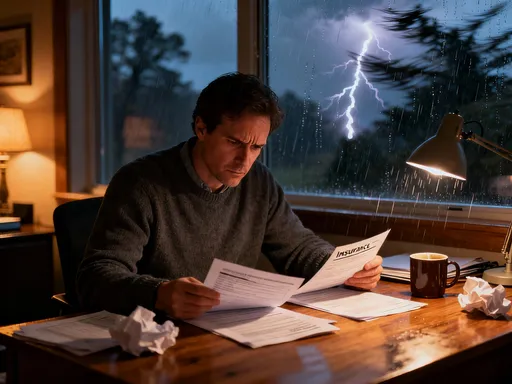
The story begins with loss — the passing of my father, a man who worked hard his entire life to build a modest but meaningful estate. He had a will, life insurance, and a small portfolio of stocks and real estate. On paper, everything seemed in order. Yet, within months, what was meant to be a comforting inheritance became a source of stress, confusion, and financial leakage. The process of probate dragged on for over a year, delaying access to funds that my mother urgently needed. Legal fees mounted, and state estate taxes took a larger share than anyone anticipated. What hurt most, however, was the tension among siblings — disagreements over asset distribution, resentment over perceived favoritism, and a lack of clarity about my father’s true intentions. The emotional toll was matched only by the financial cost: nearly 25% of the estate’s value was lost to taxes, fees, and inefficiencies.
This experience was a wake-up call. It revealed a critical truth: having a will is not the same as having an effective estate plan. A will is a starting point, but it does not protect against probate, minimize taxes, or prevent family conflict. In fact, relying solely on a will often guarantees that assets will be exposed to delays, public scrutiny, and unnecessary erosion. For many families, especially those with blended dynamics or multiple assets, the absence of advanced planning can turn a legacy of care into a legacy of complications. The gap between intention and outcome is often wide — and it is bridged not by sentiment, but by structure.
What became clear was that estate planning must be proactive, not reactive. Waiting until a crisis occurs means decisions are made under pressure, often without full information. The goal should not merely be to distribute assets, but to distribute them in a way that preserves their value and honors the original effort behind their accumulation. This realization led me to explore what lies beyond basic wills — the tools, strategies, and mindset shifts that define advanced estate planning. It was no longer enough to hope for a smooth transition; I wanted to engineer one.
Beyond the Will: What Advanced Estate Planning Really Means
Advanced estate planning is not about complexity for its own sake. It is about using the right tools to achieve specific, measurable outcomes: reducing taxes, avoiding probate, maintaining privacy, and ensuring that assets pass efficiently to the intended beneficiaries. At its core, it shifts the focus from simply documenting wishes to designing a system that works automatically, even in the face of unexpected events. This requires moving beyond the will and incorporating legal and financial instruments that operate independently of the probate process.
One of the most powerful tools in this toolkit is the trust. Unlike a will, which only takes effect after death and must go through probate, a trust can manage assets during life and after. There are different types of trusts, each serving distinct purposes. A revocable living trust, for example, allows the grantor to retain control during their lifetime while ensuring a seamless transfer of assets upon death. An irrevocable trust, on the other hand, removes assets from the taxable estate, offering potential tax advantages and protection from creditors. These structures are not just for the ultra-wealthy; they are increasingly relevant for middle-income families seeking to protect hard-earned assets.
Another critical component is beneficiary designation. Many people do not realize that assets such as retirement accounts, life insurance policies, and payable-on-death bank accounts pass directly to named beneficiaries, regardless of what a will says. If these designations are outdated or inconsistent with the overall estate plan, they can create unintended consequences — such as a former spouse inheriting a 401(k) or a minor child receiving a large sum outright. Proper coordination between legal documents and beneficiary forms is essential to ensure alignment and avoid conflicts.
Asset titling is another often-overlooked element. How an asset is titled — jointly, individually, or in a trust — determines how it will be transferred. For example, property held in joint tenancy with rights of survivorship automatically passes to the surviving owner, bypassing the will. While this can be useful, it can also create complications if the joint owner is not the intended ultimate beneficiary. Advanced planning involves reviewing and strategically adjusting how assets are titled to support the broader estate strategy. The goal is not to create a rigid system, but a flexible one that adapts to changing circumstances while minimizing friction and loss.
Tax Leaks: Where Estates Lose Value (And How to Plug Them)
One of the most significant threats to estate value is taxation. Without proper planning, estates can lose a substantial portion of their worth to federal and state estate taxes, capital gains taxes, and income taxes on retirement accounts. These are not hypothetical risks — they are real, predictable, and often avoidable. The key is to identify where the leaks occur and implement strategies to seal them before it’s too late.
The federal estate tax exemption, as of recent years, allows individuals to pass a certain amount — over $12 million — free of federal estate tax. While this may seem high, many families still face exposure due to the combined value of real estate, investment accounts, life insurance, and retirement assets. Moreover, some states impose their own estate or inheritance taxes with much lower exemption thresholds. For example, a family in a high-tax state might face a 16% estate tax on amounts exceeding $1 million, even if they are below the federal threshold. This means that without planning, a seemingly modest estate could still be subject to significant taxation.
Another major leak comes from capital gains taxes. When heirs inherit assets such as stocks or real estate, they typically receive a “step-up” in basis, meaning the cost basis is adjusted to the market value at the time of death. This can eliminate capital gains tax on appreciation that occurred during the owner’s lifetime. However, if assets are gifted during life rather than transferred at death, the recipient inherits the original cost basis, potentially triggering a large tax bill when the asset is sold. Understanding the timing and method of transfer is crucial to minimizing this burden.
Retirement accounts present a unique challenge. Traditional IRAs and 401(k)s are fully taxable to beneficiaries when withdrawn. Under current rules, most non-spouse beneficiaries must withdraw the entire balance within 10 years, creating a compressed tax liability. This can push heirs into higher tax brackets and reduce the net value they receive. One strategy to mitigate this is to consider Roth conversions during life — paying taxes now at a known rate to allow tax-free growth and withdrawals for heirs. While this requires careful cash flow planning, it can result in a more tax-efficient transfer over time.
Other strategies include lifetime gifting. Individuals can give up to a certain amount annually — over $17,000 per recipient as of recent limits — without triggering gift tax or using their lifetime exemption. This allows for gradual wealth transfer while reducing the size of the taxable estate. For larger gifts, utilizing the lifetime exemption strategically can further reduce future tax exposure. The key is to plan early and coordinate these actions with the overall estate structure to avoid unintended consequences.
Trusts Done Right: Not Just for the Ultra-Rich
Trusts are often misunderstood as tools only for the wealthy. In reality, they are valuable for any family that wants to avoid probate, maintain control over asset distribution, and protect beneficiaries from financial mismanagement or external risks. A trust is a legal entity that holds and manages assets according to specific instructions. When set up correctly, it operates seamlessly, often without court involvement, ensuring that assets are distributed efficiently and privately.
Revocable living trusts are among the most accessible options. They allow the grantor to act as trustee during their lifetime, maintaining full control over assets. Upon incapacity or death, a successor trustee takes over, managing and distributing assets according to the trust terms. Because the trust owns the assets, they bypass probate, saving time, money, and public exposure. This is especially beneficial for families who own property in multiple states, as each state would otherwise require a separate probate process.
Irrevocable trusts offer additional benefits, particularly in tax planning and asset protection. Once assets are transferred into an irrevocable trust, they are no longer part of the grantor’s taxable estate, potentially reducing estate tax liability. These trusts can also shield assets from creditors, lawsuits, and long-term care costs. While the grantor gives up direct control, they can still benefit indirectly through carefully structured provisions. For example, a grantor can establish a trust that pays income to a spouse or supports a child’s education, while preserving the principal for future generations.
Specialized trusts serve specific purposes. A bypass trust, also known as a credit shelter trust, allows a married couple to maximize their combined estate tax exemptions. When the first spouse dies, their share of assets goes into the trust, preserving the exemption, while the surviving spouse continues to benefit from the income. This prevents the unused exemption from being lost. A qualified personal residence trust (QPRT) allows homeowners to transfer their residence to heirs at a reduced gift tax value by retaining the right to live in it for a set period.
However, trusts only work if they are properly funded. Too often, families create a trust but fail to retitle assets into its name. A house, investment account, or bank account that remains in the individual’s name will still go through probate, defeating the purpose of the trust. Regular reviews are necessary to ensure that new assets are added and beneficiary designations are aligned. A trust is not a one-time document — it is a living structure that requires ongoing maintenance.
Asset Allocation for Inheritance Efficiency
Not all assets are created equal when it comes to inheritance. The type of account, its tax treatment, and how it is titled all influence how much the beneficiary actually receives. Strategic allocation — placing the right assets in the right accounts with the right beneficiaries — can significantly enhance the net value of an inheritance.
For example, taxable brokerage accounts receive a step-up in basis at death, making them ideal for highly appreciated assets such as stocks or real estate. By holding these in a taxable account, heirs can sell them with little or no capital gains tax. In contrast, traditional retirement accounts like IRAs and 401(k)s are fully taxable upon withdrawal. It often makes sense to leave these to beneficiaries in lower tax brackets, such as grandchildren or charitable organizations, to minimize the tax burden.
Life insurance is another powerful tool when used strategically. The death benefit is generally income-tax-free and can be accessed quickly, making it ideal for covering estate taxes, paying off debts, or providing immediate liquidity to heirs. Placing a life insurance policy in an irrevocable life insurance trust (ILIT) can also remove the proceeds from the taxable estate, further enhancing tax efficiency. This is particularly useful for families with illiquid assets, such as a family business or real estate, where selling assets to pay taxes could disrupt operations or force a sale at an inopportune time.
The location of assets also matters. A 529 college savings plan, for instance, can be transferred to a new beneficiary if the original one does not use all the funds, allowing for multigenerational education planning. Health savings accounts (HSAs) can be passed to a spouse tax-free but become taxable income for non-spouse beneficiaries, so naming the right heir is critical. Each account type has its own rules, and understanding these allows for more intentional planning.
The goal is not to maximize the gross value of the estate, but to maximize the net value that beneficiaries receive after taxes, fees, and delays. This requires looking beyond the balance sheet and considering the full lifecycle of each asset. By aligning asset placement with beneficiary needs, tax situations, and long-term goals, families can ensure that their wealth transfer is not just legal, but truly effective.
Coordination Is Key: Aligning Legal, Financial, and Family Goals
An estate plan is only as strong as its weakest link. Even the most sophisticated legal structure can fail if it is not coordinated with financial accounts, beneficiary designations, and family expectations. This is where many plans fall apart — not due to poor intent, but due to lack of integration.
One of the most common mistakes is failing to review and update beneficiary designations. Life changes — marriage, divorce, birth of a child, or death of a named beneficiary — can render old designations obsolete. A life insurance policy that still names a former spouse, or a retirement account that excludes a child from a second marriage, can lead to legal disputes and unintended outcomes. These designations override wills, so even a carefully written document cannot correct an outdated form.
Coordination between professionals is equally important. Attorneys draft the legal documents, but financial advisors understand the tax implications of asset transfers. Insurance agents know how policies integrate with estate strategies. When these parties work in silos, gaps emerge. The ideal approach is to assemble a team that communicates regularly and reviews the plan holistically. This ensures that every decision — from a Roth conversion to a trust funding — supports the overall objective.
Equally critical is family communication. Keeping heirs in the dark about the estate plan can breed suspicion and conflict. While details do not need to be disclosed in full, having open conversations about values, intentions, and responsibilities can prevent misunderstandings. Explaining why certain decisions were made — such as placing assets in trust or naming a specific executor — helps heirs see the plan as thoughtful rather than arbitrary. It also prepares them for their roles, whether as beneficiaries, trustees, or caregivers.
Finally, documentation must be accessible. Important papers should be stored securely but shared with trusted individuals. A digital vault or estate organizer can help centralize wills, trust documents, account information, and contact lists. Without access, even the best plan can stall. Coordination is not a one-time event — it is an ongoing process that requires attention, communication, and collaboration.
Future-Proofing Your Legacy: Flexibility and Ongoing Management
Estate planning is not a finish line — it is a journey. Laws change, families evolve, and financial circumstances shift. A plan that works today may be outdated tomorrow. The most effective estate strategies are not static; they are designed to adapt.
Regular reviews — ideally every three to five years, or after major life events — are essential. Marriage, divorce, the birth of a grandchild, the sale of a business, or a significant change in net worth all warrant a reassessment. Tax laws also change, and what was once a sound strategy may no longer apply. For example, the federal estate tax exemption has fluctuated over the past two decades, and future changes could impact planning decisions. Staying informed and proactive allows families to adjust before a crisis occurs.
Flexibility is built into the structure. Trusts can include provisions that allow trustees to adapt distributions based on a beneficiary’s needs — such as health, education, or financial responsibility. Durable powers of attorney and advance healthcare directives ensure that someone can act on your behalf if you become incapacitated. Naming successor trustees and executors ensures continuity if the original choice is unable or unwilling to serve.
Empowering trusted fiduciaries is another key element. The people you choose — whether a spouse, child, attorney, or financial institution — will carry out your wishes. It is important to select individuals who are not only trustworthy but also capable of managing complex responsibilities. Providing them with clear guidance, access to professionals, and decision-making authority can prevent confusion and delays.
In the end, maximizing an inheritance is not about aggressive tax avoidance or complex financial engineering. It is about thoughtful, intentional design that respects the value of hard-earned wealth and the relationships that sustain it. It is about ensuring that what you leave behind reflects not just your assets, but your values. By embracing advanced estate planning as an ongoing practice, families can create a legacy that endures — not just in dollars, but in dignity, clarity, and peace of mind.